Measure the pipe, not its trade name
List actual outside diameters and required lengths. Keep each pipe size and insulation thickness on a separate line.
Black elastomeric foam tubes, sheets and formed details for mechanical services.
Discuss This Material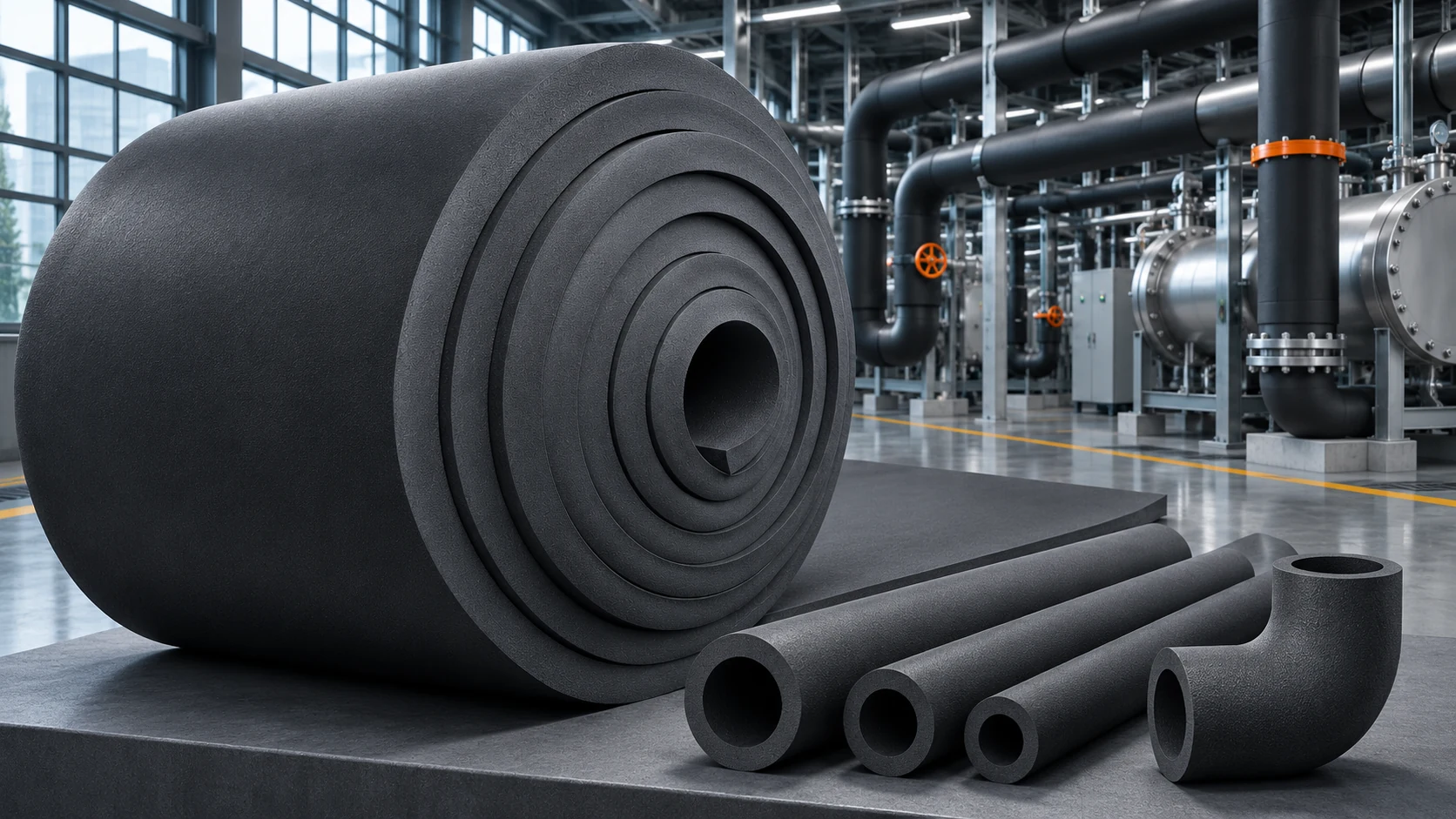
Flexible elastomeric insulation is considered for pipework, fittings and equipment in HVAC and mechanical-service projects. The specification starts with pipe outside diameter, service temperature, ambient conditions and the condensation-control objective. Treat joints, supports, valves and protective finishes as part of the insulation package.
Product-family selection guidance. Final supply specifications and tested properties are agreed for the exact grade in its quotation and technical documents.
| Parameter | Selection information |
|---|---|
| Product family | Flexible elastomeric foam insulation; tubes and sheet concepts shown |
| Appearance | Black closed-cell foam surface, as illustrated |
| Tube sizing | Match insulation bore to the actual pipe outside diameter in mm |
| Insulation thickness | Determine from thermal duty, ambient conditions and condensation risk |
| Sheet format | State width, length, thickness and whether sheets or rolls are needed |
| Fittings | Include elbows, tees, reducers, valves and support details |
| Joint method | Coordinate compatible adhesive, seams and end joints |
| Facing / protection | Identify any outdoor, UV, mechanical or wash-down exposure |
| Calculation inputs | Service temperature, ambient temperature, relative humidity and duty |
| Quantity basis | Linear metres by pipe size; m² for sheet insulation |
Measured values and classifications are not inferred from these illustrations. Request the following for the proposed product:
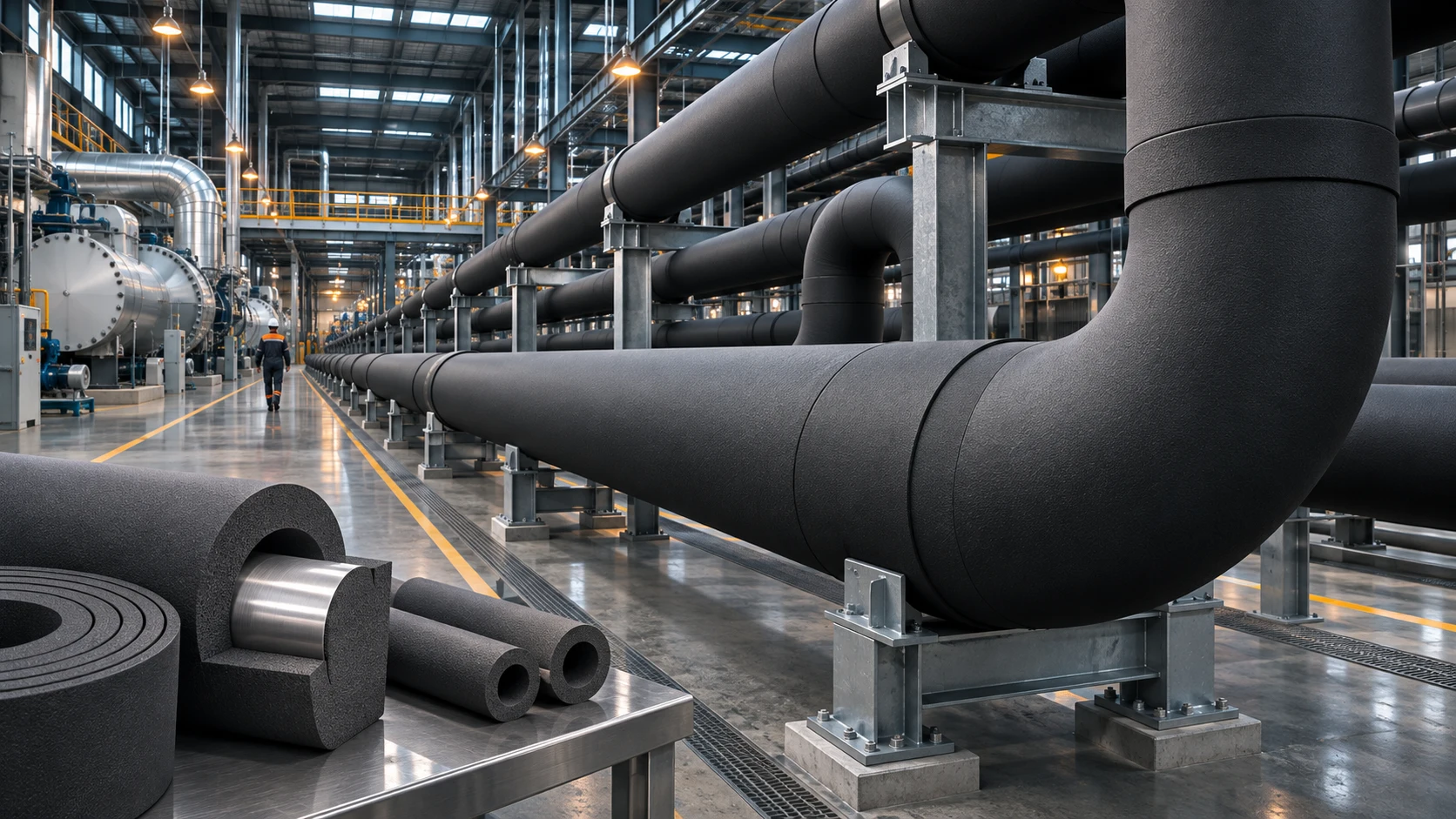
List actual outside diameters and required lengths. Keep each pipe size and insulation thickness on a separate line.
Include operating and ambient conditions so the project team can assess heat flow and condensation. Thickness selection also depends on the exact grade’s properties.
Plan seams, terminations, supports and access around valves. Adhesive compatibility and any exterior protective finish must follow the selected product documentation.
Useful answers for a better material enquiry.
A suitable thickness depends on the service, temperature, humidity, geometry and the exact insulation grade. Send these inputs for a project-based selection discussion.
Tubes require bore, wall thickness and total length. Sheets require thickness, area and dimensions, with a separate allowance for equipment and fittings.
Identify sunlight, weather and mechanical exposure. Confirm any required facing or protective coating for the selected grade and application.
Products, quantities and technical requirements — bring them into one clear enquiry.